


Beauty Camera - Sweet Camera
iMediaStar
If you want a quick way to make a selfie look more polished before sharing it, Beauty Camera - Sweet Camera is an easy app to understand. I found it most useful when I wanted to take a photo, make a few visible changes, and save the result without opening a more complicated photo editor. It belongs to the beauty category, is free to install, and is suitable for Everyone.
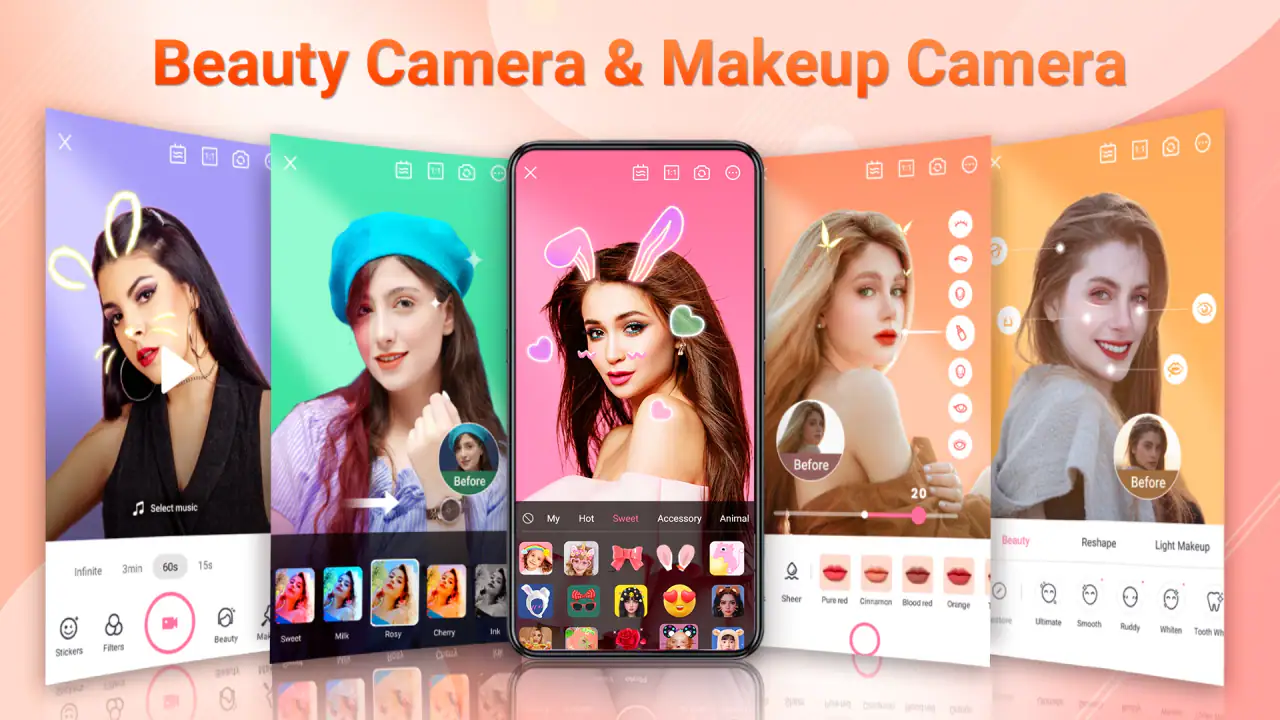
The app comes from iMediaStar and focuses on the familiar combination of a selfie camera, beauty adjustments, makeup-style effects, filters, and stickers. That sounds simple, but simplicity is exactly its appeal. I did not approach it as a replacement for a full photo-editing suite. I approached it as a fast finishing tool for everyday portraits, profile pictures, casual posts, and photos where I wanted a little more control than the standard camera provides.
The best way to use it is to treat it as a quick preview-and-refine camera, not as a promise that every picture needs heavy retouching. Subtle changes tend to keep a face recognizable and the lighting believable. Stronger effects can be fun, especially for playful images, but they are easier to overdo.
What to expect from the beauty camera
When I opened the app, the main idea was immediately clear: take or work with a selfie, then experiment with visual tools that change the mood or finish. The experience is aimed at people who prefer seeing the result while they are creating it instead of taking a plain picture first and editing it later in a separate app.
That makes it particularly convenient for quick decisions. If I am preparing a profile photo, checking how a filter changes the overall tone, or making a lighthearted picture for friends, I can compare the appearance before committing to the final image. The combination of filters, makeup effects, and stickers also means the app can move between a natural-looking portrait and something more obviously decorative.
Latest News

Uber Eats Under Pressure: What Happens When Delivery Goes Wrong

How QR & Barcode Scanner Adapts to Android and iOS Innovations

Why Waze Navigation & Live Traffic Is Your Essential Travel Companion
CapCut Mastery: Unleash Hidden Features for Pro-Level Editing

How OS Updates Enhance Roblox Adventures

Teacher Simulator: Exam Time Turns Quick Classroom Judgments into a Repetitive Loop
Its popularity is reflected in an average rating of 4.8 from around 25 thousand ratings, with more than 5 million installs. Those figures suggest that the straightforward selfie approach works for a broad audience, although popularity should not be confused with professional-level editing depth. The app is strongest when speed and accessibility matter more than precise retouching.
I would recommend it to someone who wants a low-pressure starting point. You do not need to understand layers, masks, curves, or export settings to get a visible result. On the other hand, I would not choose it first for detailed product photography, controlled portrait retouching, or a carefully color-managed workflow. A dedicated editor is usually better when every small adjustment matters.
How it differs from using the regular camera
A standard phone camera is often better at capturing a clean original, but it leaves the creative decisions for later. Beauty Camera - Sweet Camera puts those decisions closer to the moment of capture. I can try a softer look, a different color mood, or a decorative element while the image still feels like an active selfie rather than a finished file waiting for another app.
Gallery
The trade-off is control. A normal camera app may offer more dependable exposure behavior, lens choices, or manual options depending on the phone. This beauty app is designed around appearance rather than photographic control. For a quick portrait, that is a sensible priority. For a difficult lighting situation, I would take the cleanest original I could and use a more advanced editor afterward.
Who will get the most from it
First-time users, casual selfie takers, and people who enjoy trying visual styles are the clearest audience. It can also help someone who needs a presentable profile image but does not want to learn a large editing program. The sticker and makeup-oriented approach gives younger users and anyone making playful content more room to experiment, while the basic filter workflow can remain fairly simple.
I would be more cautious if you dislike face-smoothing effects, decorative overlays, or interfaces that encourage trying several looks. If your priority is preserving every natural detail, the safest approach is to keep adjustments restrained and compare the edited result with the original before saving. If your priority is professional consistency across many portraits, a more specialized editor will probably be a better long-term choice.
Getting started without guesswork
The app is free, so the first step is uncomplicated: install it on a device running Android 6.0 or later, open it, and begin with a simple portrait rather than trying every option at once. Its current version is 3.6.5, and the age classification is Everyone, which makes it approachable for a wide range of users.
For a first attempt, I recommend standing somewhere with light facing you rather than directly behind you. This is not a special requirement of the app; it is simply the easiest way to judge beauty effects honestly. If the face is already very dark or strongly shadowed, it becomes difficult to tell whether a filter is improving the image or merely hiding the lighting problem.
Start with one change at a time. Take a plain selfie, preview a filter, then inspect the face at a normal viewing size. After that, try a makeup-style effect or a sticker, but not all at once. This small routine makes it much easier to identify which part of the result you actually like.
A practical first-session routine
Take a relaxed selfie with a neutral expression and steady framing.
Preview a filter and check whether skin color, hair, and the background still look believable.
Try a beauty or makeup adjustment lightly before exploring stronger styles.
Add a sticker only if it supports the purpose of the picture rather than covering the face.
Compare the finished version with the unedited view before saving or sharing it.
This order matters because decorative tools can distract from the actual portrait. I found that choosing the general mood first, then refining the face, produced a more coherent result than beginning with stickers. It also gives a beginner a clear way to undo a choice mentally: if the photo looks wrong, I know whether the filter, beauty effect, or decoration caused the problem.
Your first meaningful success
A useful first goal is not an extreme transformation. It is a selfie that looks like you on a good day, with a little more visual consistency. I would choose a moderate filter, apply only enough beauty adjustment to keep the face comfortable, and leave the background mostly alone. That creates a practical profile image or casual post without making the app feel like a costume generator.
For example, imagine taking a quick photo before meeting friends. You have a few minutes, the room has uneven light, and you want something better than a rushed camera snapshot. I would take several frames, select the one with the most natural expression, test a restrained filter, and then decide whether a small makeup effect adds anything. If the image already works, I would stop there. The app is most successful when it saves time rather than creating a long editing session.
Another useful workflow is preparing a small set of images with different moods. I might use a cleaner filter for a profile picture, a brighter style for a social post, and a sticker-based treatment for a private message. Keeping the purpose in mind prevents the same effect from being applied automatically to every photo.
Where beginners may become confused
The biggest source of confusion is usually the difference between a filter, a beauty adjustment, makeup styling, and a sticker. They can all change the appearance of a selfie, but they solve different problems. A filter changes the overall visual mood. A beauty adjustment affects the portrait’s finish. Makeup effects suggest a particular cosmetic look. Stickers add graphic decoration.
If a face suddenly looks too artificial, the answer is not always to remove the filter. Sometimes the makeup effect is doing most of the work. If the portrait feels flat or oddly colored, the filter may be the issue instead. I recommend returning to the plain image after each major change, because that gives you a reliable reference instead of judging every effect against the previous effect.
Stickers can also create a false impression that the photo needs more editing. They are useful when the goal is playful communication, but they can make a profile image feel cluttered or date-specific. I would keep them away from important facial details and use them only when they contribute to the message of the picture.
Another point worth understanding is that a beauty camera cannot repair every technical problem. A blurred frame, harsh backlight, blocked face, or distracting background may remain a problem even after applying a flattering style. Taking a better original is often more effective than adding another effect. This is one reason I prefer making small changes and checking the whole composition repeatedly.
Privacy and purchase awareness
Because this is a camera and selfie app, I would still read the permission prompts carefully and grant only what is needed for the action I am trying to perform. I do not treat a free download as a reason to tap through every system request automatically. If I only want to experiment with an existing image, I would pay attention to which access is requested for that workflow.
The app is free to use as a download, but it includes optional in-app purchases ranging from $1.99 to $19.99 per item. That matters if you are trying to keep your editing entirely free. I would explore the basic experience first and decide whether the available tools already meet my needs before considering a purchase. A beginner should not feel pressured to buy anything simply to test whether the app suits them.
Small techniques that improve the result
One non-obvious improvement is to judge the image at two distances. First, look at the full composition to see whether the face stands out naturally. Then inspect the portrait closer to notice overly smooth skin, unnatural edges, or makeup that does not match the lighting. An effect can look attractive in a small preview while becoming distracting when viewed larger.
A second technique is to choose the filter after selecting the best expression, not before. Filters can make one frame appear more appealing than another simply because they change brightness or color. Selecting the expression first keeps the emotional quality of the portrait in charge.
A third is to use stickers as framing elements rather than face replacements. Placing decoration near an empty corner or around the edge can add personality while leaving the eyes and mouth readable. This is especially helpful when the image is meant for a conversation or informal post rather than a formal profile.
I also found it useful to stop editing once the original purpose has been met. If I wanted a brighter, friendlier portrait and the image already achieved that, another filter usually reduced clarity rather than improving it. The app makes experimentation easy, but that convenience can encourage unnecessary adjustments.
How it compares with editing after the photo
Compared with a general photo editor, this app feels more immediate and more focused on faces. It is a better fit when I want to see beauty-oriented changes during the selfie process and finish quickly. A general editor is usually stronger for cropping, detailed color correction, selective adjustments, and working with many kinds of images beyond portraits.
Compared with social media filters, Beauty Camera - Sweet Camera offers a more dedicated beauty-camera experience rather than making the effect part of a larger social platform. That can be useful if I want to prepare an image before deciding where to share it. The compromise is that I may need another app for publishing, messaging, or more advanced composition.
Compared with the phone’s built-in portrait tools, the appeal is experimentation. The built-in camera may produce a cleaner, more predictable original, while this app gives me more ways to change the style of a selfie immediately. My choice depends on the goal: for faithful capture, I prefer the regular camera; for a quick visual makeover, this app is more engaging.
Performance expectations and everyday friction
The app is not difficult to approach, but the experience still depends on the phone and the image being used. Effects that alter a face or add decorations may feel less comfortable when the original photo is poorly lit or the subject is not clearly framed. I would not interpret a disappointing result as proof that every tool is weak; sometimes the source image simply gives the app too little to work with.
There is also a creative limitation in the very thing that makes the app approachable. Beauty filters tend to guide the result toward a particular idea of a polished selfie. That may be exactly what you want for a quick portrait, but it can feel restrictive if you are looking for unusual color grading, documentary realism, or precise artistic control.
For that reason, I would keep the regular camera or a general editor available alongside it. Beauty Camera - Sweet Camera works well as the fast option in a broader workflow. It does not have to replace every other tool to be useful.
Who should skip it
I would skip this app if I mainly photograph landscapes, food, documents, or products. Its appeal is centered on selfies and portrait styling, so those other subjects do not benefit as directly from its main purpose. I would also look elsewhere if I need advanced retouching with exact control over individual areas of an image.
It may not be the right choice for someone who wants a completely untouched appearance. Even when used carefully, a beauty-focused interface encourages changes to the face. If natural texture and faithful color are more important than speed, taking the picture with the standard camera and leaving it alone may be the better decision.
Finally, users who dislike optional purchase prompts should examine the free tools first and keep their spending limit in mind. The app costs nothing to download, but optional items can change the overall experience for someone who wants every style available.
My recommendation after using it
Beauty Camera - Sweet Camera is a friendly, focused choice for quick selfie improvements. I like it because the path from opening the camera to seeing a more finished portrait is short, and the combination of filters, beauty styling, makeup effects, and stickers gives beginners several ways to experiment without learning a complex editor.
My recommendation is to begin with a natural-looking result, save the stronger effects for playful images, and always compare the edited portrait with the original. That habit protects the details that make the photo feel like you. It also helps answer the practical question every new user has: do I actually like this change, or am I simply reacting to something different?
With a release date of February 4, 2023, and a current version of 3.6.5, the app has had time to establish its place among accessible beauty tools. Its free entry point and Everyone rating make it easy to try, while the optional purchases mean I would explore before spending. For a first-time user who wants a quick, approachable selfie editor, I think it is worth trying. For professional retouching or completely natural camera work, I would choose a more specialized alternative.
In short, I would keep this app for the moments when I want a portrait to look ready in a few steps, without turning a simple selfie into a technical project. Used lightly, it is convenient and enjoyable; used without restraint, it can make an image feel less personal. The strongest results come from treating its effects as finishing touches rather than replacements for good light, a clear expression, and a well-composed photo.
FAQs for Beauty Camera - Sweet Camera
What features does Beauty Camera - Sweet Camera offer?
Beauty Camera - Sweet Camera provides a variety of features designed to enhance your photos. It offers real-time beautification effects, filters, and stickers to personalize your selfies. Additionally, it includes advanced editing tools like skin smoothing, face reshaping, and eye enlargement, ensuring that every photo looks its best before sharing.
Is Beauty Camera - Sweet Camera free to use?
Beauty Camera - Sweet Camera is available for free download, providing a range of basic features at no cost. However, there are premium features and additional filters that require in-app purchases. Users can choose to subscribe for a more comprehensive editing experience without ads and with access to exclusive content.
How user-friendly is Beauty Camera - Sweet Camera for beginners?
The app is designed with an intuitive interface, making it accessible even for beginners. With easy-to-navigate menus and straightforward controls, users can quickly apply effects and make edits. The app also provides tutorials and tips, helping new users get the most out of its features without a steep learning curve.
Can Beauty Camera - Sweet Camera be used offline?
Yes, Beauty Camera - Sweet Camera can be used offline for capturing and editing photos. However, some features, like downloading new filters or accessing cloud storage, require an internet connection. Users can still enjoy most editing tools and save their creations directly to their device without needing to be online.
Is Beauty Camera - Sweet Camera safe in terms of privacy?
Beauty Camera - Sweet Camera prioritizes user privacy by adhering to strict data protection protocols. The app requires permissions to access your camera and gallery, but it does not store photos without consent. Users are encouraged to review the privacy policy to understand how their data is handled and to ensure a secure experience.
Pros
- User-friendly interface for easy navigation.
- Wide range of filters and effects.
- Real-time editing features available.
- Compatible with both Android and iOS.
- Regular updates with new features.
Cons
- Ads can be intrusive at times.
- Limited features in the free version.
- Some filters require a stable internet.
- Occasional lag on older devices.
- In-app purchases can be pricey.


